The Death of the Brake Lathe (Why We Rarely Resurface Rotors Anymore)
"Can't You Just Turn My Rotors?" Here's the Honest Answer
I hear this question at least a few times a week, and I completely understand why you're asking it. A generation ago, your dad probably had his rotors turned every time the brakes were done. It saved money, it worked, and it made sense.
So when you come in expecting the same thing and we tell you we're replacing them instead, it can feel like we're trying to upsell you. We're not. Let me explain what's actually going on.
What "Turning" Rotors Even Means
Before we get into why we rarely do it anymore, let's make sure we're on the same page about what rotor resurfacing (or "turning") actually is.
When brake rotors wear down, they develop grooves, scoring, and an uneven surface from the constant friction against your brake pads. A brake lathe shaves a thin layer of metal off the rotor's surface to make it smooth and flat again. Done correctly, it used to be a legitimate way to extend the life of a rotor without replacing it outright. The key phrase there is used to be.
The Problem: Modern Rotors Are Designed to Be Disposable
Here's where the automotive world quietly changed on you without much announcement.Over the past two decades, automakers have been under enormous pressure to improve fuel economy. Every pound they shave off a vehicle translates into better mileage numbers and compliance with federal standards. One of the easiest places to trim weight? The brake rotors.
Modern rotors are significantly thinner and lighter than the cast-iron tanks we used to work with. They're engineered to do the job, but just barely. The margin between a brand-new rotor and a rotor that's already at its minimum safe thickness is often razor thin.
What the Minimum Thickness Number Actually Means
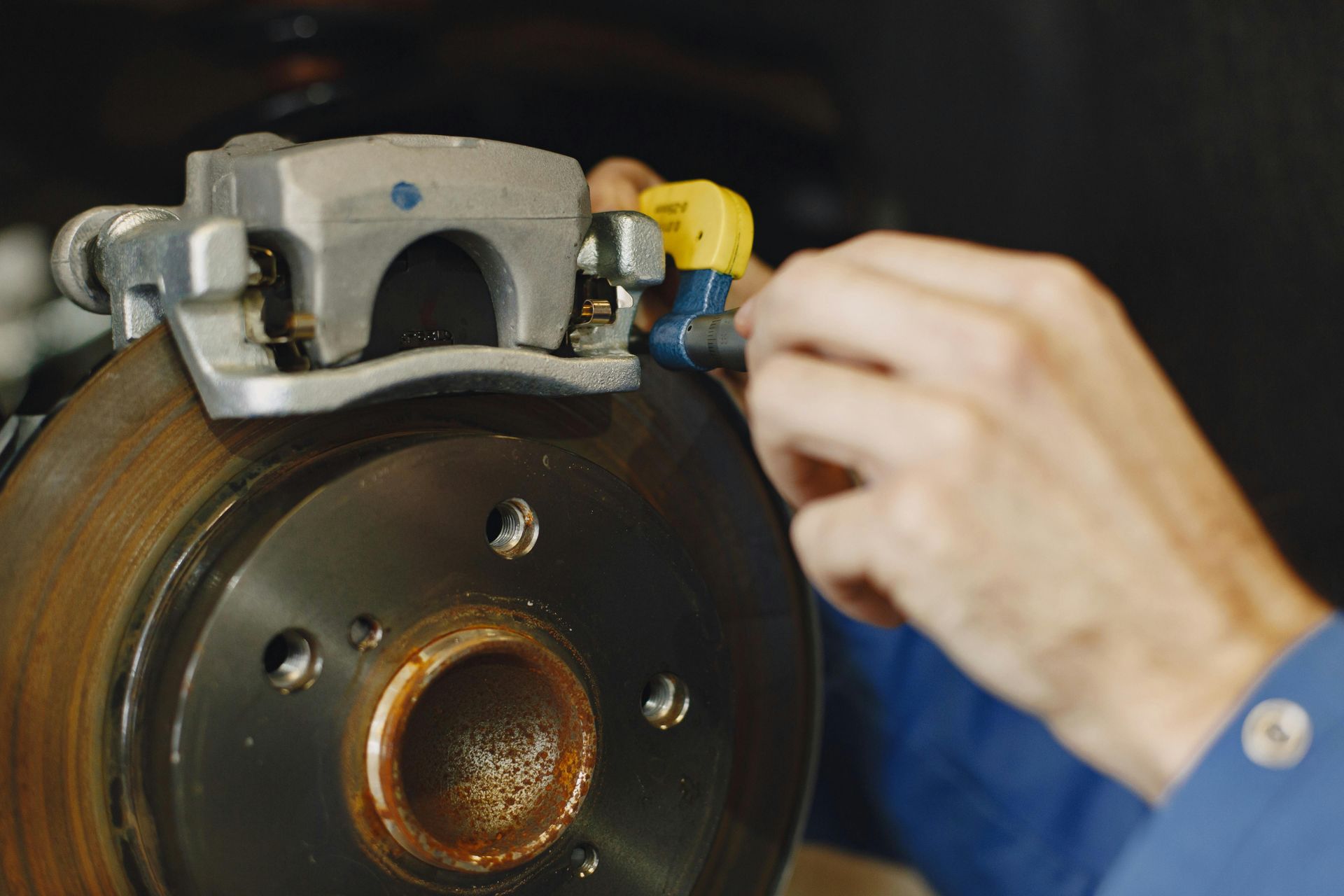
Every rotor has a minimum thickness specification stamped right on it, and this number isn't a suggestion. It's the absolute floor below which that rotor is no longer structurally safe to use.
By the time a rotor has worn down enough to show scoring or warping that's causing you to feel vibration or hear noise, it's often already close to that minimum spec. When we put it on the lathe and shave off even a few thousandths of an inch to smooth it out, we can push it below that threshold.
A rotor that's under minimum thickness doesn't just wear out faster. It can:
Crack under heavy braking- Warp more quickly from heat
- Fail to dissipate heat effectively, increasing your stopping distance
- Put you and your family at real risk in an emergency stop
The Math Has Changed Too
Rotors today are far more affordable than they were 20 or 30 years ago. In many cases, a brand-new set of quality rotors for a common vehicle costs only marginally more than the labor to resurface old ones. Plus, the new rotors come with full thickness, full warranty, and full peace of mind.
When you factor in the liability of sending someone home on rotors we knowingly put at or below spec, there's really no decision to make.
When We Still Might Resurface
To be fair, there are situations where resurfacing still makes sense. Larger trucks and performance vehicles sometimes have thicker, heavier rotors with more material to work with. If your rotors are significantly above minimum thickness and showing only light scoring, resurfacing could legitimately be an option.
But for most everyday passenger cars and crossovers on the road today? We're going to recommend replacement, and now you know exactly why.
At Lakeview Automotive, we're not in the business of selling you things you don't need. But we're also not going to cut corners that put your safety at risk just to save a few dollars in the short term. That's not how we'd treat our own family's vehicles, and it's not how we'll treat yours.
Give us a call if you have questions about your brakes. We're happy to walk you through it.
Contact Us
Address: 205A Smith Rd, Moore, SC 29369
Phone: (864) 486-8889
Hours: Mon–Fri, 8 AM – 5:30 PM