The Brake Flush Every 2 Years Rule Is Outdated and Here Is Why
If you have ever been told to flush your brake fluid every two years without question, you are not alone. That rule has been repeated so often in owner's manuals and quick-lube waiting rooms that most drivers accept it as gospel. But here is the truth we see every day working on vehicles in Moore, SC and the surrounding Spartanburg County area: blanket maintenance schedules are no substitute for actual data, and when it comes to brake fluid, following a calendar instead of a test could be costing you money or worse, compromising your safety.
What Brake Fluid Actually Does and Why It Degrades
Brake fluid is the hydraulic lifeline of your braking system. When you press the pedal on Highway 176 during rush hour or slow down approaching the roundabout on Reidville Road, that force is transmitted through your brake fluid to the calipers and rotors that actually stop your vehicle. For that process to work correctly, the fluid must maintain a high boiling point under intense pressure and heat.
The problem is that brake fluid is hygroscopic, meaning it naturally absorbs moisture from the surrounding air over time. As water content increases, the boiling point of the fluid drops significantly. This creates a condition known as brake fade, where your pedal feels soft or spongy under hard braking because the fluid is boiling before it should. In a heavy braking situation, that could be the difference between stopping in time and not stopping at all.
Why Climate Makes All the Difference
Here in the Upstate South Carolina region, we deal with a climate that swings between humid summers and wet winters. That humidity is not just uncomfortable, it is actively working against your brake fluid. A vehicle sitting in a high-humidity environment will absorb moisture into its brake fluid considerably faster than the same vehicle parked in a dry, arid climate like the desert Southwest.
This is exactly why the two-year rule falls apart under scrutiny. That blanket recommendation was never designed to account for regional weather patterns, how often a vehicle sits idle, or how aggressively a driver uses their brakes. A driver making daily stop-and-go runs on John B. White Boulevard is putting far more thermal stress on their brake fluid than someone putting mostly highway miles on I-85. Treating both drivers with the same service interval is not precision maintenance, it is guesswork.
What We Recommend Instead
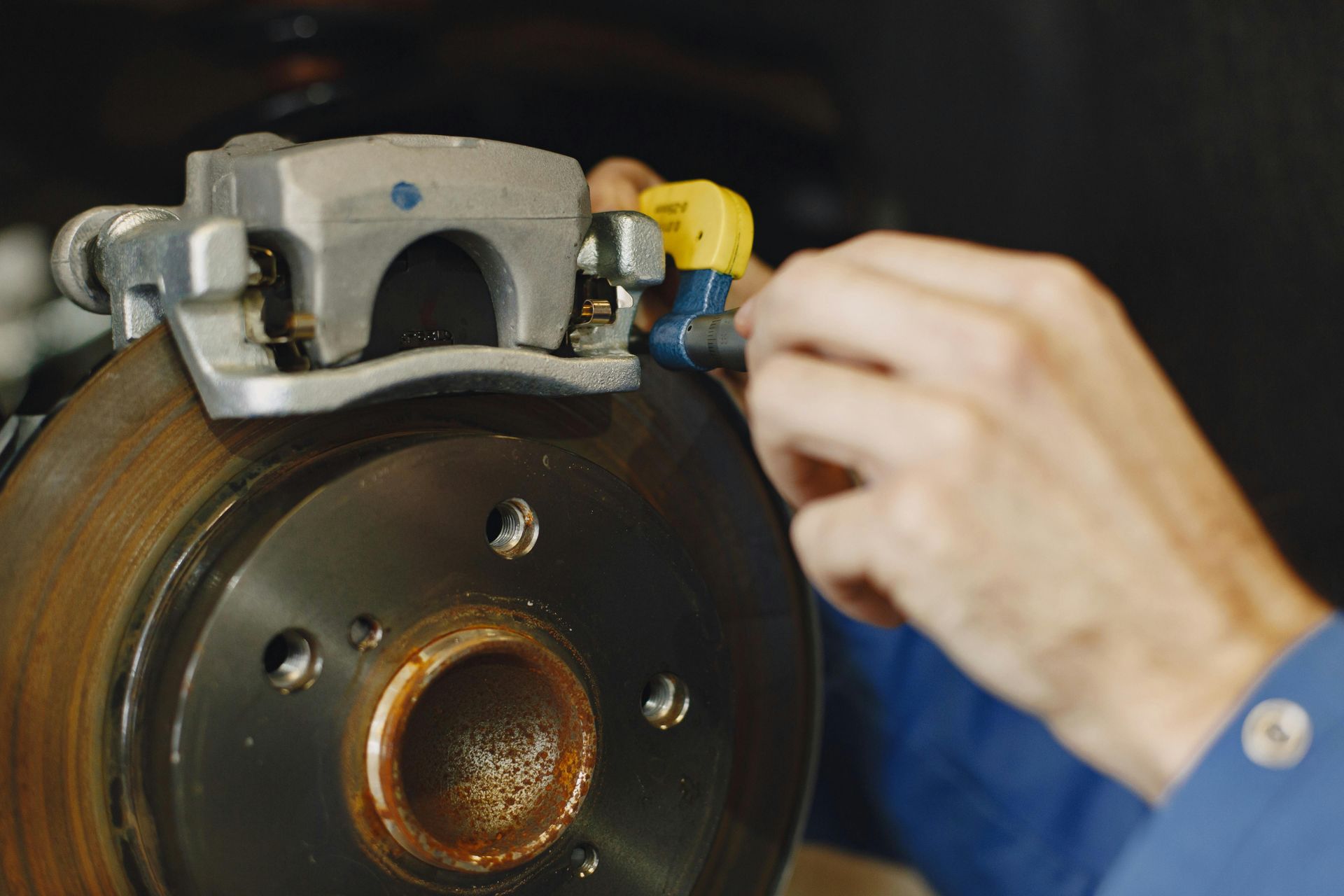
Rather than scheduling a brake fluid flush based purely on the calendar, we recommend moisture-level testing as the starting point for any brake fluid service decision. A quality brake fluid tester measures the moisture content of your fluid in minutes and gives us an actual number to work with. Most manufacturers consider brake fluid with a water content above two to three percent to be compromised, but we have tested vehicles well under the two-year mark that were already there and vehicles pushing four years that were still within safe range.
This approach does a few important things. It stops you from paying for a flush you may not need yet. It also catches brake fluid that has degraded faster than expected before it becomes a safety issue. And it gives you confidence that the service recommendation you receive from us is based on your vehicle and your driving conditions, not a generic guideline written to cover the broadest possible population of drivers.
The Vehicles and Driving Habits That Put Fluid at Risk Fastest
Not all brake fluid degrades at the same rate. Here are the situations where we see accelerated moisture absorption most often.
Vehicles that sit unused for extended periods absorb moisture faster because the fluid is not cycling through the system regularly. Older vehicles without fully sealed brake systems are more vulnerable than newer models. Drivers who do a lot of mountain or steep-grade driving, including those who take weekend trips up toward Tryon or the Blue Ridge Parkway, put repeated thermal stress on their fluid. Performance and towing vehicles running their brakes hard also see faster degradation.
If any of those describe your driving life, a two-year interval may actually be too long, not too short.
Get a Brake Fluid Test Before Your Next Flush
We are not in the business of selling services people do not need. We are in the business of keeping drivers safe on the roads around Spartanburg, Moore, and beyond. If you cannot remember the last time your brake fluid was checked or tested, come by Lakeview Automotive and we’ll check it for you.
Contact Us
Address:
205A Smith Rd, Moore, SC 29369
Phone: (864) 486-8889
Hours: Mon-Fri 8:00 AM to 5:00 PM